Email Us : mail@arico.co.in


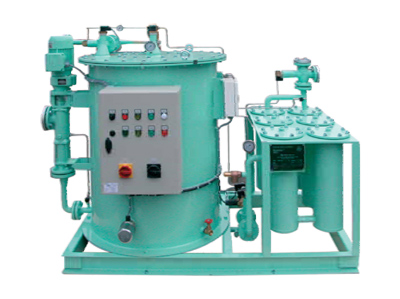
De-oiled and emulsion-free water is discharged overboard after passing a 15ppm alarm (which can also be adjusted to 5 ppm if required).
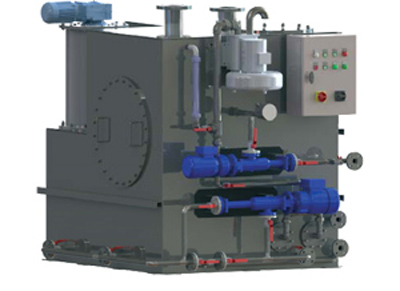
The OCS- COMPACT treatment system is a membrane-based, biological treatment plant designed for installation and operation on ships, available in sizes ranging from 10 to 80 person.
Can operate with both gravity and vacuum toilet systems.
Separate collection tank is superfluous; can be equipped with same, if required.
The OCS- COMPACT treatment system is a three-stage plant consisting of collecting tank, mixing and sludge return tank and membrane tank

Ships transfer 3 to 5 billion tons of ballast water annually between oceans. Ballast water contains many marine organisms, larvae, eggs, plankton that, when introduced into a new environment, invade the local marine ecological system. It has been estimated that more than 7000 species are transported each day through ballast tanks.
The direct economic impact as well as the potential long term damages to the environment and people has led to the development of Regulations to control the transport and discharge of aquatic organisms. In 2004, the IMO adopted the International Convention for the Control and Management of Ships' Ballast Water and Sediments (a.k.a. BWM Convention), which will enter into force 12 months after ratification by 30 states representing 35% of the world merchant shipping tonnage.
| The BWM Convention requires ships to develop ballast water management plans, to maintain ballast water record book, and to undertake certain measures (exchange of ballast water under D-1 rule, and treatment under D-2 standard) to control the ballast water discharges. | ||||||||||||
| IMO D-2 Standard For Discharge Ballast Water | ||||||||||||
|
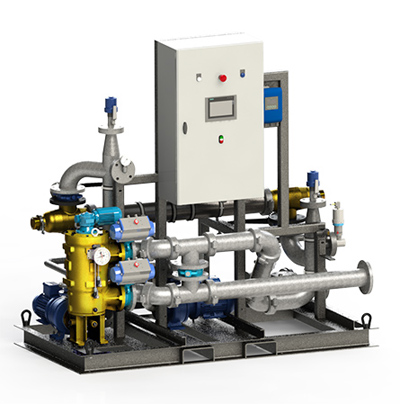
BIO-UV's BIO-SEA® system first cleans ballast water using a screen filter, in order to reduce the amount of total suspended particles, organic or not, present in the sea water. The filter size will be dependent on the system size according to the ballast pump flow rate.
Then UV treatment takes place in a reactor without any addition of chemicals nor creation of active substances. It inactivates the microorganisms present in the water (bacteria, phytoplankton, zooplankton).
When ballasting, both operations of filtration and UV disinfection are carried out: the objective is to limit the loading of suspended solids and living microorganisms in the ballast tanks.
When deballasting, only UV disinfection is done. This allows re-treating the water that stayed in the ship's ballast tank during the journey, in order to eliminate the possible biological recontamination, to ensure compliance with the IMO standards.
The entire operation of the BIO-SEA® system is automated (valves opening and closing, filter cleaning, UV intensity regulation).
| Technical Characteristics | ||||||||||||||
|